


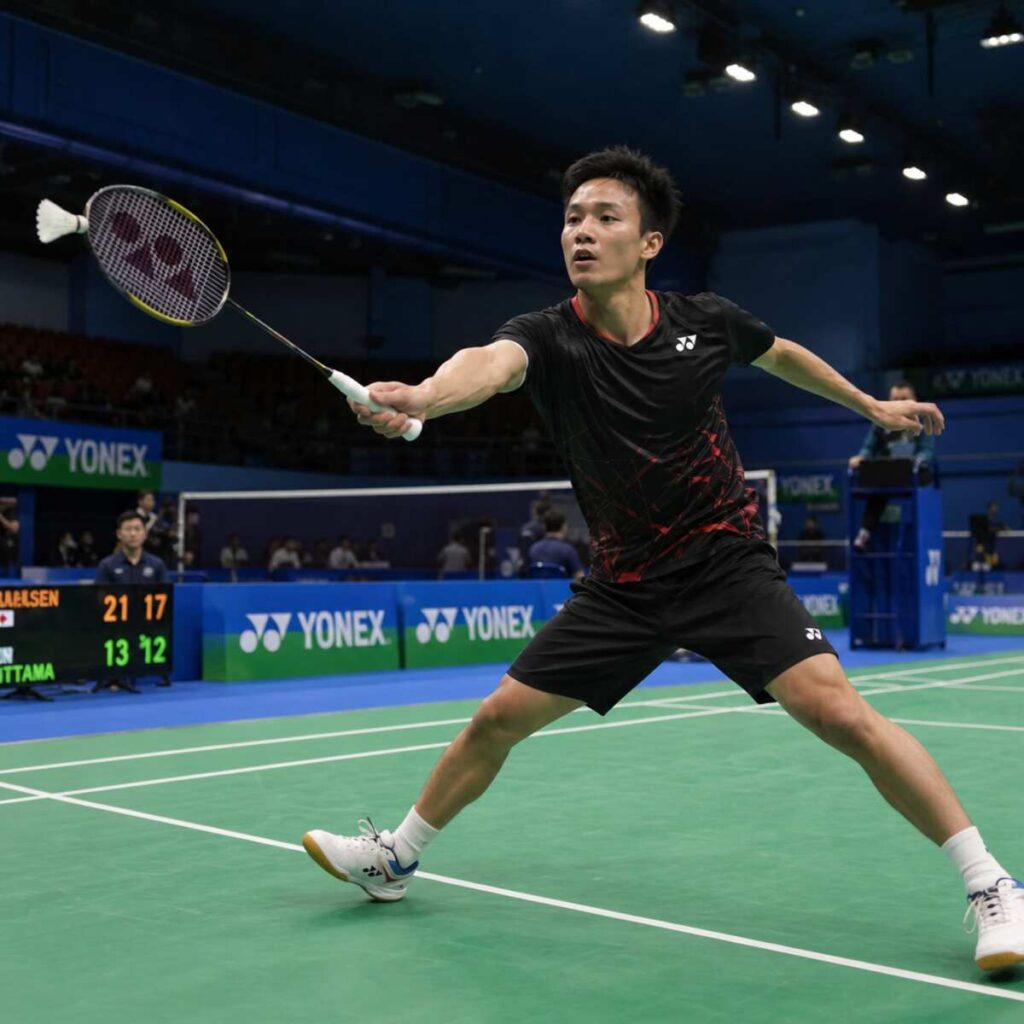
If you step onto a badminton court today, you will immediately notice that the game has evolved. The rallies are faster, the defense is tighter, and the transition from backcourt attacking to frontcourt interception happens in the blink of an eye. To keep up with this blistering pace, your equipment needs to be more than just an extension of your arm; it needs to be a masterpiece of modern engineering. Enter the Yonex Nanoflare 1000 Game. Obtain the Best information about Gsc108.
For players looking to bridge the gap between casual play and competitive mastery, choosing the right racket is paramount. You need something that offers lightning-fast maneuverability without completely sacrificing the ability to finish a rally with a thunderous smash. This comprehensive guide will serve as your ultimate resource, exploring every fiber, specification, and practical application of the nanoflare 1000 game on the court.
Whether you are a defensive specialist, a front-court maestro in doubles, or a singles player looking to up your swing speed, understanding this racket’s mechanics will transform the way you play.
Decoding the Nanoflare 1000 Game: What Makes It Stand Out?
When Yonex released the Nanoflare 1000 series, it shattered records—quite literally, with the flagship “Z” model clocking the fastest smash speed ever recorded in badminton history. However, professional-grade rackets often come with extreme stiffness and highly demanding sweet spots that are unforgiving for the everyday player.
This is where the “Game” tier shines. It is engineered specifically for intermediate to advanced players who want to experience top-tier technology in a more accessible, forgiving, and budget-friendly package.
The Power of Advanced Materials: Nanocell Neo
One of the standout features of this racket is its construction. While the top-end models use incredibly rigid graphite, this version utilizes a slightly different material matrix to provide a more forgiving feel. The Nanocell Neo material performance is a critical factor in this racket’s playability.
Nanocell Neo is a highly resilient, yet surprisingly flexible graphite material. When incorporated into the frame, it allows the racket to flex optimally upon impact with the shuttlecock. For an intermediate player, this slight flex acts as a catapult. It holds the shuttle on the string bed for a fraction of a millisecond longer than an extra-stiff racket, translating your swing energy into repulsion power. This means you don’t need the flawless biomechanics of a world-class professional to generate excellent clearing depth or stinging half-smashes.
Understanding the Specs: Weight and Grip Size
If you look at the racket’s head, you will likely see the characters “4U G5.” But what does this actually translate to during a match?
Breaking down the Yonex 4U G5 weight specification meaning is essential for understanding how the racket will perform in your hands:
- 4U (Weight): The “U” scale measures racket weight. A 4U racket weighs between 80.0 and 84.9 grams (unstrung). This is currently the most popular weight category in modern badminton. It is heavy enough to provide stability and momentum during a smash, yet light enough to prevent shoulder and wrist fatigue during long, grueling matches.
- G5 (Grip Size): The “G” denotes the circumference of the wooden handle. G5 is a standard, relatively small grip size preferred by players in Asia and increasingly around the world. A smaller grip is generally recommended because you can easily make it thicker by adding layers of overgrip, whereas you cannot make a thick grip smaller. A G5 grip allows for a high degree of finger maneuverability, which is vital for quick grip changes between forehand and backhand during fast drives.
Deep Dive into Yonex Technologies
A badminton racket is no longer just a hoop attached to a stick. The nanoflare 1000 game is packed with proprietary innovations designed to maximize aerodynamics and repulsion. Let’s break down the science behind the swing.
The Engine of Speed: Yonex Sonic Flare System Benefits
The defining characteristic of the entire Nanoflare line is the Sonic Flare System. But what exactly is it?
The benefits of the Yonex Sonic Flare System stem from the strategic placement of highly resilient graphite materials at the top and bottom of the racket frame. In the Nanoflare 1000 series, Yonex places high modulus graphite at the top of the frame (around the 12 o’clock position) and an incredibly elastic graphite (like M40X or its equivalent in the Game model) at the bottom (around the 6 o’clock position).
Why does this matter?
- Maximum Repulsion: When you strike the shuttle, the frame deforms slightly. The strategic placement of these materials causes the frame to snap back to its original shape instantaneously. This “snapback” acts like a trampoline, propelling the shuttle off the string bed with immense speed.
- Enhanced Stability: Head-light rackets can sometimes feel “wobbly” upon impact due to the reduced weight of the head. The Sonic Flare System stiffens the crucial stress points of the frame, ensuring that the racket face remains stable even if you hit slightly off-center.
Cutting Through the Air: Frame Design
To achieve true speed, a racket must minimize air resistance. The design team at Yonex tackled this from two different angles in this racket.
First, they implemented the AERO frame swing speed technology. Unlike traditional “box” frames—which are square and blocky to provide stability and a solid feel—the AERO frame features smooth, aerodynamic contours. Imagine the difference between swinging a flat wooden board and a streamlined airplane wing. The AERO frame drastically reduces drag, allowing your racket head to accelerate faster through the air. This is crucial for late defensive retrievals and sharp, flat drives.
Second, they integrated wide profile frame aerodynamics. While the edges are aerodynamic, the actual cross-section of the frame is slightly wider than traditional rackets. This wider profile serves a vital purpose: it prevents the frame from warping under high string tensions and high-impact shots. You get the best of both worlds—a frame that slices through the air effortlessly while maintaining the structural integrity of a heavy-duty box frame.
Performance on the Court: A Comprehensive Nanoflare 1000 Game Review
Theory and specifications are great, but how does the racket actually feel when you are sweating it out in a 20-all game in the third set? Any thorough nanoflare 1000 game review must look at its practical application across different match scenarios.
Speed and Maneuverability
The standout feature of this racket is its speed. Because the balance point is shifted toward the handle, the racket head feels incredibly light. This translates directly to elite defensive badminton racket maneuverability.
When your opponents are raining down continuous smashes, your defense relies on reflex and the ability to position your racket face in a fraction of a second. The lack of weight in the head allows you to whip the racket from a forehand defensive block to a backhand drive almost instantly. Players who excel at counter-attacking—turning a defensive block into an aggressive flat drive—will find this racket to be an absolute dream.
The Doubles Specialist’s Weapon
Because of this maneuverability, it acts as the quintessential head light badminton racket for doubles. Modern doubles is a game of flat exchanges, drive battles, and net interceptions.
- Front Court: At the net, you need a racket that moves as fast as your eyes. The lightweight head allows you to perform tight spinning net shots, quick kills, and deceptive pushes without the racket “dragging” behind your wrist.
- Mid Court: In drive battles, the AERO frame allows you to out-pace your opponents. You can generate a faster swing speed on a shorter backswing, catching your opponents off guard.
The Power Dilemma: Can You Smash with It?
A common myth in the badminton community is that you need a heavy, head-heavy racket to hit powerful smashes. This leads to the frequent question: are head light rackets good for power players?
The answer is a resounding yes, but with a caveat regarding technique. If you are a player who relies purely on a stiff, full-arm swing (often referred to as “arm-ing” the shuttle), you will likely find a head-light racket lacking in power. This is because the racket head has less mass to generate momentum.
However, if you have decent technique, you can master improving smash power with head light rackets. Power in badminton is derived from the formula: Force = Mass x Acceleration. While a head-light racket reduces the Mass at the top of the racket, it allows you to exponentially increase the Acceleration of your swing.
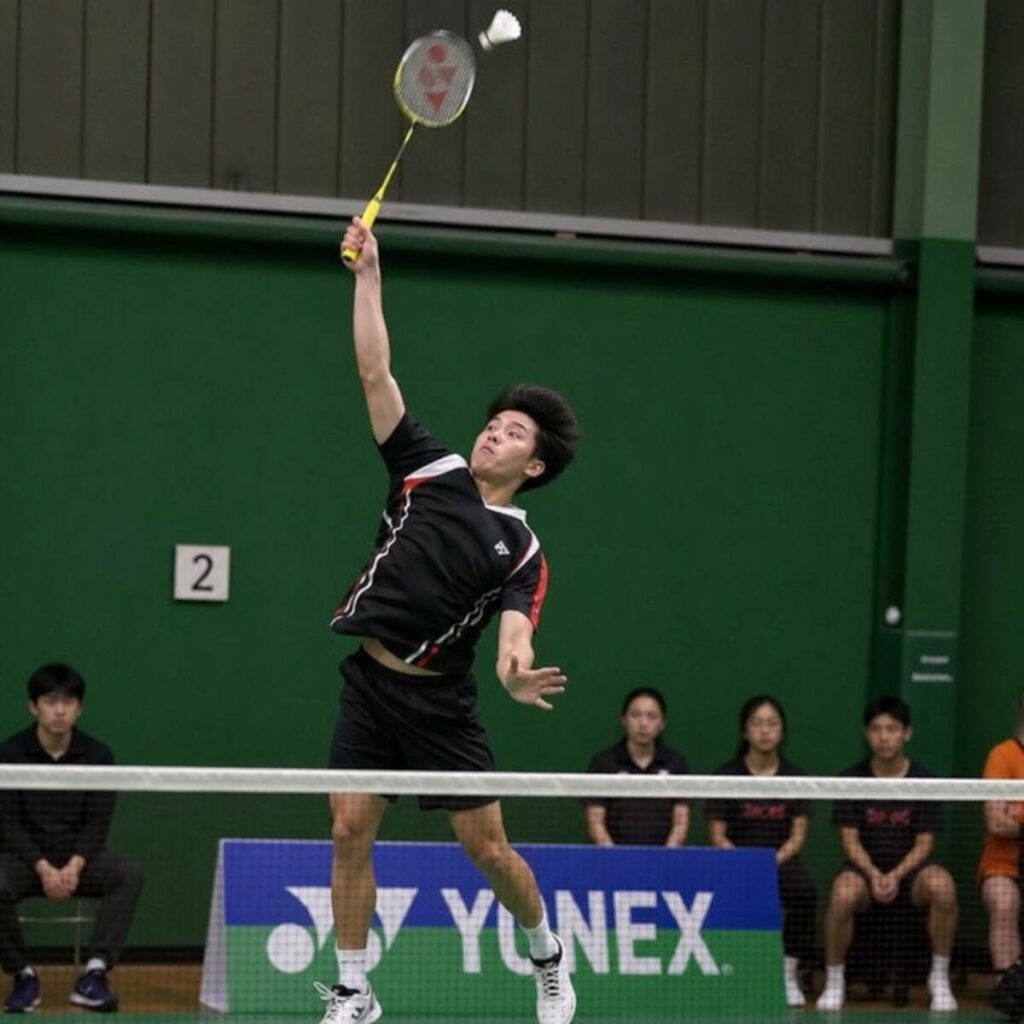
By utilizing proper pronation, forearm rotation, and a sharp wrist snap, you can whip the racket head at incredible speeds. The combination of the Sonic Flare System and high swing speed results in a smash that is not necessarily “heavy,” but rather piercing, sharp, and incredibly steep.
Choosing the Right Specs for Your Game
Owning a great piece of intermediate level professional badminton equipment is only half the battle. To unlock its full potential, you must tailor it to your specific physical capabilities and playing style.
Flexibility and Stiffness
If you are transitioning from a beginner racket, understanding how to choose badminton racket stiffness is crucial.
- Flexible Shafts: Best for beginners. The racket bends easily, generating power for the player even with a slow swing speed.
- Stiff/Extra Stiff Shafts: Best for advanced/pro players. They offer pinpoint control and instant repulsion, but require immense swing speed to bend the shaft. If you cannot bend a stiff shaft, your shots will feel dead and weak.
The nanoflare 1000 game features a medium stiffness shaft. This is the sweet spot for intermediate and advancing players. It offers enough flex to assist with power generation on baseline clears, but is stiff enough to provide accurate shuttle placement on drop shots and smashes. It will not punish you for being slightly out of position or having a less-than-perfect swing.
The Art of String Tension
The strings are the only part of the racket that actually touches the shuttlecock. Getting the tension right is non-negotiable.
What is the best string tension for intermediate players? Generally, a tension between 22 lbs and 26 lbs is ideal.
- Lower Tension (22-24 lbs): The string bed is looser, creating a larger “sweet spot” and a more pronounced trampoline effect. This gives you more effortless power for clears and lifts, and is much more forgiving on the arm.
- Higher Tension (25-27+ lbs): The string bed becomes a hard board. The sweet spot shrinks significantly. However, if you hit the sweet spot, the shuttle leaves the strings instantly, providing immense control, superior touch at the net, and a highly satisfying hitting sound.
For the Nanoflare 1000 Game, starting at around 24-25 lbs is highly recommended. It perfectly balances the racket’s inherent repulsion with the control needed for intermediate play.
Selecting the Perfect String
Pairing this fast frame with the right string is the final piece of the puzzle. Here are some of the recommended strings for Yonex Nanoflare rackets:
- Yonex Exbolt 63/65: These are relatively new strings that focus heavily on repulsion and quick snapback. The Exbolt 63, being an ultra-thin 0.63mm string, pairs beautifully with the Nanoflare 1000 Game, enhancing that sharp, instant repulsion feeling.
- Yonex BG66 Ultimax: The gold standard for repulsion and high-pitched hitting sound. If you want your smashes and drives to sound like a gunshot, this is the string to choose. Keep in mind, its durability is lower due to its thin gauge.
- Yonex Aerobite: A hybrid string setup (thicker main string, thinner cross string) designed for ultimate control and spin. If you play a lot of tight net shots and slicing drops, Aerobite will grip the shuttle beautifully, while the racket’s head-light nature allows you to execute them quickly.
Market Placement and Value
When upgrading your gear, budget is always a consideration. Let’s look at the financial aspect and how this racket sits in the current market.
Analyzing the Investment
The nanoflare 1000 game price typically sits comfortably in the mid-range bracket of Yonex’s lineup. It is significantly more affordable than the flagship 1000 Z model, yet it retains a vast majority of the aesthetic appeal and core technologies.
For the price, you are investing in a racket made in Taiwan (historically known for excellent quality control, just a step below the Japan-made top-tier rackets). It is built with high-quality graphite and features technologies that were exclusively reserved for top-tier rackets just a few years ago. If you play 2 to 3 times a week, the durability and performance-to-price ratio of this racket make it a highly justifiable purchase.
The Ultimate Nanoflare 1000 Series Comparison Guide
To truly appreciate the “Game” model, it helps to see where it fits within the broader family. Yonex typically releases their flagship rackets in four tiers: Z (or Pro), Tour, Game, and Play. Let’s look at a brief Nanoflare 1000 series comparison guide:
- Nanoflare 1000 Z: The flagship. Made in Japan. Extra stiff shaft, highly compact frame. Designed for advanced to professional players with flawless technique and explosive swing speed.
- Nanoflare 1000 Tour: Also made in Taiwan. Features a stiff shaft and materials very close to the Z. A great stepping stone for advanced players on a budget.
- Nanoflare 1000 Game: The model in question. Medium stiffness, highly forgiving, brilliant for intermediates. It focuses on playability and comfort while maintaining the series’ signature speed.
- Nanoflare 1000 Play: The entry-level model. Made in China. Highly flexible shaft, basic graphite construction. Ideal for absolute beginners who want the look of the top-tier racket.
Exploring Alternatives
If you are shopping in this price bracket, you might be considering other Yonex lines. A common question arises for players looking at alternative rackets for Arcsaber 11 Play.
How does the Nanoflare 1000 Game compare to the Arcsaber series?
- The Arcsaber Series (e.g., Arcsaber 11 Play/Game): These are even-balance rackets. They are designed to hold the shuttle on the string bed longer, giving the player ultimate control, accuracy, and an all-around solid feel. They are the “jack of all trades.”
- The Nanoflare 1000 Game: This is a head-light racket. It trades a tiny bit of that solid, heavy feeling for absolute raw speed and instant repulsion.
If you find an even-balance racket slightly sluggish in fast-drive exchanges or feel wrist fatigue during defensive drills, switching from an Arcsaber to the Nanoflare 1000 Game will feel like taking weights off your ankles.
Actionable Tips: Getting the Most Out of Your Nanoflare 1000 Game
If you have decided to add this racket to your bag, here are some actionable tips to ensure you are maximizing its potential on the court.
1. Adjust Your Grip and Swing
Because the racket is so light in the head, you do not need wide, looping swings.
- Shorten your backswing: In doubles, keep your racket carriage high and your backswing minimal. Use finger power and wrist snap to generate pace.
- Relax your grip: Hold the racket loosely (like holding a small bird). Only squeeze the grip tightly at the exact moment of impact. This allows the AERO frame to accelerate freely.
2. Focus on Placement Over Brute Force
You aren’t wielding a heavy sledgehammer; you are wielding a scalpel. Instead of trying to smash straight through your opponent’s chest, use the racket’s speed to play steep, sharp, sliced smashes aimed at their racket-bearing hip or the sidelines.
3. Maintain Your Equipment
Even the best intermediate level professional badminton equipment requires care.
- Check your grommets: The black plastic tubes that protect the strings from the frame wear out over time. Because head-light rackets rely on high string tension for repulsion, worn grommets can cause the string to snap or the frame to cave in. Replace them regularly.
- Avoid Extreme Heat: Never leave your racket in a hot car. Extreme heat can soften the carbon resin, warping the frame, especially when it is under high string tension.
4. Optimize Your Footwork
A fast racket requires fast feet. The racket will allow you to intercept shuttles earlier at the net, but you have to be there in time. Practice your split-step and lunging techniques so you can capitalize on the split-second advantage the Nanoflare 1000 Game provides.
Conclusion: Is the Nanoflare 1000 Game Right for You?
The badminton landscape is continuously shifting toward speed, agility, and rapid counter-attacks. The Yonex Nanoflare 1000 Game stands out as a perfectly calibrated tool for this modern era of the sport.
By combining the highly repulsive Sonic Flare System, the aerodynamic benefits of the AERO frame, and a forgiving medium-stiff shaft, Yonex has created a racket that elevates the intermediate player’s game without demanding professional-level physique or technique.
It is the ultimate equalizer on the court. It allows defensive players to return smashes with stinging flat drives, enables doubles players to dominate the net, and proves that with the right technique, head-light rackets can indeed deliver match-winning power.
If you are ready to increase your swing speed, improve your defensive maneuverability, and step up your game without breaking the bank, the nanoflare 1000 game is an investment that will undoubtedly pay dividends on the scoreboard. Equip yourself, string it up to your perfect tension, step onto the court, and prepare to dictate the pace of the rally.