

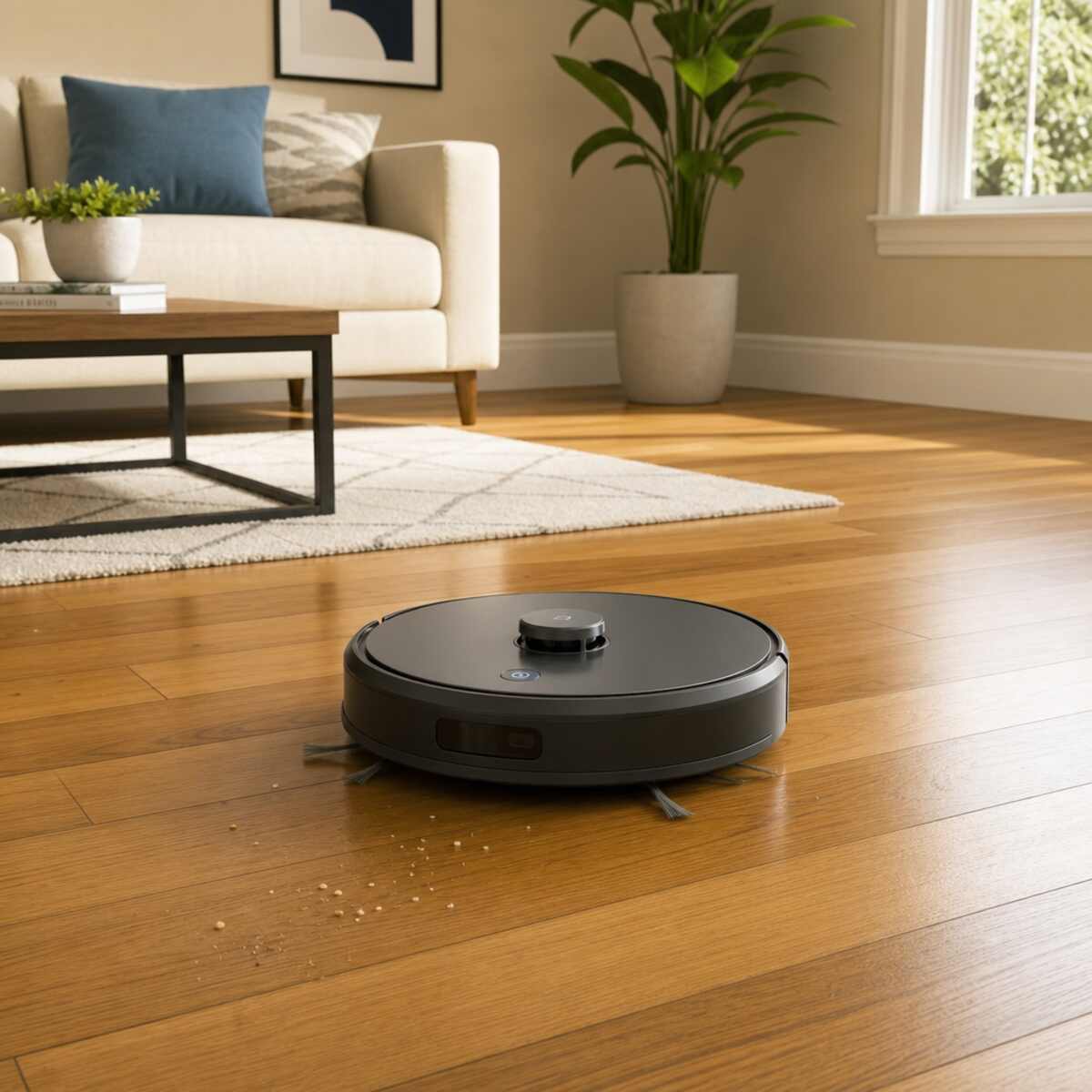

Imagine reclaiming hours of your life every single week—time previously lost to the tedious, repetitive chore of sweeping and vacuuming. For decades, the vision of a truly automated home remained confined to science fiction. Today, that vision is a tangible reality, gliding quietly across our living room floors. Robot vacuums have fundamentally transformed how we approach household maintenance, evolving from chaotic, bumper-car-like gadgets into sophisticated, AI-driven cleaning machines. Discover the best info about Robot Süpürge.
Whether you are a busy professional, a parent juggling a hectic household, or a pet owner tired of finding endless tumbleweeds of fur under the sofa, the latest automated floor care technology offers an unprecedented level of convenience.
In this comprehensive guide, we will explore the intricate world of autonomous cleaning. From deciphering the latest navigation technologies to understanding the practicalities of day-to-day maintenance, we will cover everything you need to know to make an informed decision. By the time you finish reading, you will understand exactly how to find the best automatic floor cleaners for your specific lifestyle and home layout.
The Evolution of Automated Floor Care
To appreciate the capabilities of modern robot vacuums, it helps to understand where they came from. The journey of the robotic vacuum is a fascinating tale of engineering and consumer technology.
From Clunky Prototypes to Intelligent Assistants
The earliest iterations of robot vacuums, introduced in the late 1990s and early 2000s, were little more than motorized dustpans. They relied on a “bump and turn” mechanism, randomly navigating a room until they bumped into an obstacle, at which point they would pivot and head in a new direction. While novel, this approach was highly inefficient. The machines frequently missed large patches of the floor, got stuck under furniture, and took hours to clean relatively small spaces.
Today’s landscape is radically different. Modern machines are equipped with military-grade navigation technology, powerful processors, and advanced sensors. They don’t just wander; they observe, calculate, and execute precise cleaning paths. They have transitioned from being passive novelty items to becoming proactive members of your household’s cleaning routine.
Why They Are the Ultimate Time-Savers
The primary appeal of these devices lies in the concept of “passive cleaning.” Traditional vacuuming requires your active participation—you have to push, pull, maneuver, and plug in the machine. A robotic vacuum, however, operates autonomously. It cleans while you work, while you sleep, or while you are out running errands. This shift from active chore to passive maintenance drastically reduces the mental load of household management, allowing you to focus your time and energy on things that truly matter.
Under the Hood: How Robot Vacuums Navigate and Clean
When you read robot vacuum reviews, you will encounter a lot of technical jargon regarding navigation and mapping. Understanding these systems is crucial because a vacuum’s ability to navigate your home effectively is just as important as its suction power. A vacuum that gets stuck constantly or cannot find its way around a kitchen island is of little use, regardless of how well it picks up dirt.
Navigation Technologies: A Tale of Lasers and Cameras
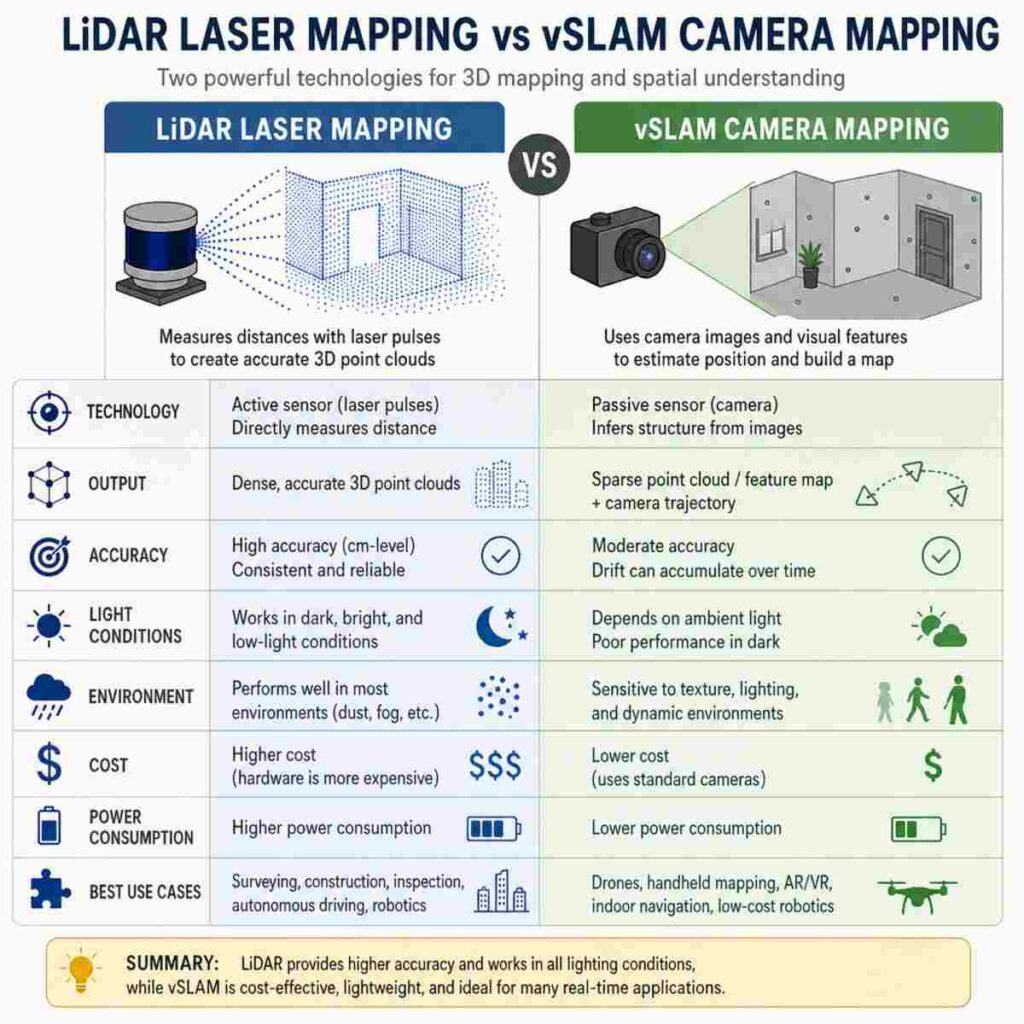
The brain of a robot vacuum relies on its navigation system to understand its environment. Currently, the market is dominated by two primary technologies: LiDAR and vSLAM. Understanding LiDAR vs vSLAM navigation technology will help you choose the right model for your home’s unique layout.LiDAR (Light Detection and Ranging)
LiDAR is the same technology used in many self-driving cars. A robot vacuum equipped with LiDAR features a small, spinning turret on top of the unit. This turret emits invisible laser beams thousands of times per second. By measuring how long it takes for these lasers to bounce off walls, furniture, and other obstacles and return to the sensor, the vacuum calculates precise distances.
Pros of LiDAR:
- Extreme Accuracy: LiDAR creates highly precise, to-scale maps of your home in real-time.
- Darkness Operation: Because it relies on lasers rather than ambient light, a LiDAR vacuum can map and clean your home in pitch darkness.
- Speed: These vacuums tend to map a home much faster on their initial run.
Cons of LiDAR:
- Height Constraints: The spinning turret adds height to the vacuum, which might prevent it from sliding under very low-clearance furniture.
- Mirrors and Glass: Highly reflective surfaces can sometimes confuse the lasers, though software updates have largely mitigated this issue.
vSLAM (Visual Simultaneous Localization and Mapping)
Instead of lasers, vSLAM technology uses one or more upward or forward-facing optical cameras to “see” the room. As the vacuum moves, the camera takes thousands of pictures of your ceiling, walls, and furniture. An onboard processor identifies distinct visual landmarks (like the corner of a picture frame or the edge of a window) and uses geometry to calculate the vacuum’s position relative to those landmarks.
Pros of vSLAM:
- Lower Profile: Without a laser turret on top, vSLAM vacuums are often slimmer and can fit under lower furniture.
- Object Recognition: Because they use actual cameras, high-end vSLAM models can often be trained via AI to recognize and avoid specific hazards (like pet waste or charging cables).
Cons of vSLAM:
- Light Dependency: Cameras need light to see. A vSLAM vacuum may struggle to navigate or update its map in a completely dark room.
- Slower Mapping: Generating a map via visual landmarks generally takes a bit more time and exploration compared to laser mapping.
Precision Cleaning: Sensors and Edges
Navigation technology tells the vacuum where it is in the room, but localized sensors tell it what is directly in front of, beside, and below it.
Obstacle avoidance sensors and edge cleaning mechanisms are what separate an average robot from an exceptional one.
- Drop Sensors: Located on the bottom of the unit, these infrared sensors detect sudden drops (like a staircase) and immediately stop and reverse the vacuum to prevent a tumble.
- Bump Sensors: Even with advanced mapping, a gentle physical bump sensor acts as a failsafe when the vacuum encounters a moving obstacle, like a walking pet or a person.
- Wall Sensors: These allow the vacuum to track perfectly parallel to a wall, getting as close to the baseboard as possible.
- Edge-Sweeping Brushes: Because robot vacuums are round (or D-shaped), they feature spinning side brushes that reach out beyond the chassis to flick dust and debris from corners and edges directly into the path of the main suction roller.
The Mapping Process: Setting Up for Success
To get the most out of your smart cleaner, you need to understand how to map your home for smart cleaning. The initial mapping run is a critical phase where the robot learns the geography of your house.
Step-by-Step Guide to Perfect Home Mapping:
- Declutter the Floor: Before you start the mapping run, pick up everything that isn’t permanent furniture. Remove stray shoes, power cords, dog toys, and loose socks. The goal is to give the robot a clear view of the actual floor plan.
- Open All Desired Doors: Ensure the doors to all the rooms you want the robot to clean are fully open. If a door is closed during the mapping phase, the robot will interpret it as a solid wall.
- Optimize Lighting (for vSLAM): If your vacuum uses camera-based navigation, turn on the lights in all rooms and open the blinds so the cameras can clearly identify visual landmarks.
- Start the Initial Run: Open your smartphone app and initiate a “Mapping Run” or a full clean. During this run, do not interfere with the robot. Do not pick it up or move it manually, as this will scramble its internal coordinates.
- Edit and Refine: Once the robot returns to its dock, the app will present you with a digital map of your home. You can now divide the map into specific rooms (e.g., Kitchen, Living Room, Master Bedroom) and label them. This allows you to command the vacuum to clean specific areas later.
Critical Considerations When Choosing a Robot Vacuum
Finding the best robot vacuums isn’t about buying the most expensive model; it’s about finding the model that best matches your living situation. When browsing options, pay close attention to the following factors.
Suction Power and Brush Roll Design
Suction power is typically measured in Pascals (Pa). Entry-level vacuums usually offer around 1500 to 2000 Pa, which is sufficient for hard floors and daily dust maintenance. Mid-range to premium models boast anywhere from 3000 to 8000+ Pa, providing deep-cleaning capabilities capable of pulling heavy debris from deep within carpet fibers.
However, suction is only half the battle. The design of the main brush roll is equally important. Traditional bristle brushes agitate carpets well but are prone to hair tangles. Modern, high-end models often use dual multi-surface rubber brushes. These rubber extractors stay in constant contact with the floor, adjusting to different floor types, and are practically immune to hair wraps—a massive plus for pet owners.
Floor Types and Transitions
One of the most common dilemmas consumers face is choosing models for hardwood floors vs carpets.
- For Hardwood and Tile: Look for vacuums with excellent edge-cleaning capabilities, soft rubber tires (to prevent scratching), and powerful suction to pull dust from the crevices between floorboards. Many hard-floor optimized robots also feature a built-in mopping attachment to wipe away fine, stuck-on dust.
- For Carpets and Rugs: Carpet requires agitation. You need a model with a robust brush roll, high suction power (minimum 3000 Pa), and an “Auto-Boost” feature. Auto-Boost utilizes acoustic or optical sensors to detect when the robot moves from a hard floor onto a carpet, automatically increasing the suction to maximum power to pull out embedded dirt.
If your home has a mix of both, ensure the robot vacuum has large, sturdy wheels capable of climbing over threshold dividers and transitioning smoothly from bare floors onto thick rugs without getting stranded.
The Pet Hair Challenge
If you share your home with a Golden Retriever, a Husky, or a couple of shedding cats, you might be wondering: are robotic sweepers worth it for pet hair?
The definitive answer is yes—but only if you choose the right model. Pet owners face a unique set of challenges: heavy daily shedding, dander, and the occasional tracked-in dirt or litter. A robot vacuum transforms this struggle by performing daily maintenance, preventing the hair from weaving itself deeply into carpets or clumping into corners.
Must-have features for pet owners:
- Tangle-Free Brush Rolls: Look for all-rubber extractors rather than bristles. You will spend significantly less time with a pair of scissors cutting tangled hair off the roller.
- Large Dustbin Capacity: Pet hair is bulky. It fills up small dustbins incredibly fast.
- Advanced Object Recognition: Pets occasionally leave “accidents” on the floor. Premium models use AI cameras to identify and steer clear of solid pet waste, preventing a catastrophic and unhygienic mess from being smeared across your house.
Breathing Easier: The Role of Filtration
While vacuums are designed to pick up dirt, the action of pulling air in and pushing it out can inadvertently exhaust microscopic particles back into your room. This is where filtration becomes critical, especially for allergy and asthma sufferers.
The inclusion of HEPA filtration in automated cleaning devices is a game-changer. HEPA (High-Efficiency Particulate Air) filters are rigorously tested to trap 99.97% of airborne particles as small as 0.3 microns. This includes dust mites, pet dander, pollen, and mold spores.
When evaluating a robot vacuum’s filtration system:
- Ensure the filter is genuinely HEPA-rated, not just “HEPA-style.”
- Check if the filter is washable, which reduces long-term maintenance costs.
- Remember to clean or replace the filter regularly, as a clogged filter drastically reduces the vacuum’s suction power and efficiency.
The Pinnacle of Convenience: Automation and Smart Features
The true magic of modern robotic cleaners lies in their ability to operate with minimal human intervention. They are not just vacuums; they are integrated smart home devices designed to seamlessly blend into your digital lifestyle.
The Rise of the Auto-Empty Dock
Perhaps the most significant innovation in robot vacuum technology over the past five years is the auto-empty base. A standard robot vacuum has a small onboard dustbin that requires manual emptying after every one or two cleaning runs. If you forget to empty it, the robot cannot clean.
Understanding self-emptying base station benefits changes the way you look at robotic cleaning. When a robot equipped with this feature finishes its cleaning cycle, it returns to its docking station. The dock then utilizes a powerful secondary vacuum motor to suck the dirt out of the robot’s onboard bin and into a large, sealed, disposable allergen bag located inside the base.
Why a Self-Emptying Base is Worth the Investment:
- Weeks of Hands-Free Cleaning: A typical base station bag holds up to 60 days’ worth of dirt, dust, and hair. You can literally ignore vacuuming for two months at a time.
- Allergy Relief: Emptying a standard robot dustbin often creates a plume of dust that floats back into your face and the air. With a self-emptying base, the dirt is sealed in a bag. When it’s full, you simply pull out the bag, which automatically seals itself, and throw it away. Zero dust exposure.
- Uninterrupted Cleaning: If the robot’s bin gets full in the middle of a large cleaning job, it can return to the dock, empty itself, and then resume cleaning exactly where it left off.
Smart Integration and Voice Control
Today’s robotic helpers are designed to be part of a broader connected ecosystem. Smart home integration for hands-free cleaning allows you to link your vacuum to voice assistants like Amazon Alexa, Google Assistant, or Apple Siri.
Imagine preparing dinner, dropping a handful of flour on the floor, and simply saying, “Alexa, tell the vacuum to clean the kitchen.” Within seconds, the robot undocks, navigates directly to the kitchen, cleans the mess, and returns to its base—all without you lifting a finger or opening an app.
Furthermore, integrating your vacuum with smart home routines adds another layer of automation. You can set a trigger so that the vacuum automatically starts cleaning the moment your smart thermostat detects that you have left the house for work.
Mastering the App: Scheduling and Boundaries
The companion mobile app is your control center. It transforms a simple cleaning tool into a highly customizable cleaning service.
Scheduling Deep Cleans via Mobile App: You are no longer limited to simply turning the vacuum on or off. Through the app, you can create intricate, customized cleaning schedules based on your family’s routine.
- Monday, Wednesday, Friday at 10:00 AM: Clean the entire house on standard suction.
- Every evening at 8:00 PM: Clean only under the dining room table on high suction (perfect for after family dinners).
- Saturday at 2:00 PM: Perform a double-pass deep clean of the living room carpet.
Keeping the Robot Where It Belongs: Not every area of your home is suitable for a robot vacuum. You might have a corner with a tangle of computer cords, a delicate antique rug, or a pet’s food and water bowls that you don’t want the robot bumping into.
Historically, manufacturers provided physical barriers to keep vacuums out of these areas. Today, we have digital solutions. Understanding boundary strips vs virtual walls helps you manage your robot’s territory:
- Boundary Strips (Magnetic Tape): These are physical rolls of magnetic tape that you cut to size and lay on the floor. The robot’s sensors detect the magnetic field and refuse to cross it. While effective, they are aesthetically unpleasing and can be tripping hazards.
- Virtual Walls/No-Go Zones: This is the modern, app-based solution. Using the detailed map of your home generated by the vacuum, you can literally draw red boxes or lines on your smartphone screen. The robot’s software respects these digital boundaries as if they were solid brick walls. You can block off a single pet bowl, an entire room, or create a “No-Mop” zone over a rug for hybrid vacuums.
Living with a Robot Vacuum: Real-World Expectations
Integrating a robot vacuum into your daily life is mostly seamless, but there are a few practical considerations you must keep in mind to ensure a harmonious coexistence with your new automated helper.
Acoustic Footprint: How Loud Are They?
A common question among new buyers is regarding the acoustic impact of the machine. If you plan to run the vacuum while working from home, watching television, or sleeping, understanding the noise levels of different cleaning modes is essential.
Robot vacuums are generally significantly quieter than traditional upright vacuums. However, the noise level fluctuates based on the task:
- Quiet/Eco Mode (approx. 50-55 dB): This is comparable to the hum of a refrigerator or a quiet conversation. It is perfect for light daily dusting, running while you are working in the same room, or even running at night.
- Standard Mode (approx. 60-65 dB): Similar to background music or an air conditioner. You can comfortably hold a conversation over it, but you will definitely hear it working.
- Max/Turbo Mode (approx. 70-75 dB): This mode is used for deep cleaning thick carpets. It is noticeably loud. While quieter than a traditional vacuum (which can hit 80+ dB), you likely won’t want to watch TV or take a phone call in the same room while it’s running.
- Auto-Emptying Cycle (approx. 80-85 dB): The self-emptying base station is very loud, similar to a traditional shop vacuum. Fortunately, this process only lasts for about 10 to 15 seconds at the end of a cleaning run.
Battery Care and Longevity
Your robot relies on a rechargeable lithium-ion battery. To get the most out of your investment, maintaining autonomous vacuum battery life should be a priority.
Unlike older nickel-cadmium batteries, modern lithium-ion batteries do not suffer from “memory effect,” meaning you do not need to let them drain completely before recharging. In fact, lithium-ion batteries prefer to be kept topped up.
Tips for Extending Battery Health:
- Keep it Docked: When not in use, the robot should remain on its charging base. The internal battery management system prevents overcharging.
- Avoid Extreme Temperatures: Do not place the docking station in direct, intense sunlight or in unheated garages during freezing winters. Extreme heat and cold accelerate battery degradation.
- Use It Regularly: Batteries degrade faster when left idle for long periods. Running your vacuum a few times a week keeps the battery active and healthy.
- Store Properly: If you are going on a long vacation (several months), fully charge the vacuum, turn the physical power switch off, and store it in a cool, dry place off the dock.
With proper care, the battery will typically provide peak performance for 2 to 3 years before you notice a reduction in runtime.
Understanding the Lifespan of the Machine
When investing hundreds (or thousands) of dollars in an appliance, longevity is a key concern. So, what is the average lifespan of a smart vacuum?
Generally, a high-quality robot vacuum from a reputable brand will last between 4 to 6 years with regular use and proper maintenance. However, “lifespan” in this context usually refers to the point where an internal component—like the motherboard or wheel motors—fails and costs more to replace than buying a new unit.
To reach the upper end of that lifespan, routine maintenance is non-negotiable.
- Weekly: Check the brush roll for tangled hair, tap the dust filter against a trash can to dislodge fine particles, and wipe the cliff sensors with a dry microfiber cloth.
- Monthly: Wash the filter (if washable) and let it dry for 24 hours, inspect the side brushes for fraying, and wipe down the charging contacts on both the robot and the dock.
- Yearly: Replace the HEPA filter, the main brush roll, and the side spinning brushes. Most apps feature a “Maintenance” tab that tracks component usage and alerts you when it is time to replace these wearable parts.
Troubleshooting Like a Pro: Fixing Common Glitches
Even the most advanced technology occasionally encounters a hiccup. Before calling customer support or writing off the machine, most common issues can be resolved with simple home troubleshooting.
The Robot Won’t Charge or Find Its Home
One of the most frustrating experiences is waking up to find your robot dead in the middle of the room because it couldn’t recharge. Troubleshooting docking station connectivity issues usually comes down to three main culprits:
- Dirty Charging Contacts: Over time, dust, floor wax, and grime can build up on the metal charging plates located on the bottom of the robot and on the dock. This acts as an insulator, preventing electricity from flowing. Take a lightly dampened melamine sponge (like a Magic Eraser) or a cloth with rubbing alcohol and gently buff the metal contacts until they shine.
- Poor Dock Placement: The robot uses an infrared beacon emitted by the dock to find its way home. If the dock is hidden under a low sofa, tucked tightly into a corner, or blocked by a potted plant, the robot cannot “see” the beacon. Manufacturers recommend placing the dock against a flat wall with at least 1.5 feet of clearance on both sides and 4 feet of clear space in front.
- Wi-Fi Interference: The robot communicates with your app via your home’s Wi-Fi. Most smart vacuums only operate on a 2.4 GHz network (which has a longer range than 5 GHz). If your dock is in a Wi-Fi dead zone, the robot may lose connection to the app and struggle to receive “Return to Base” commands. Ensure the dock is located in an area with a strong Wi-Fi signal.
The “Lost” or “Stuck” Robot
Sometimes, the app will notify you that the robot is stuck, or you may notice it spinning in circles and acting confused.
- Dark Floors and Rugs: High-contrast, dark patterns on rugs or very dark hardwood floors can sometimes trigger the robot’s infrared drop sensors. The robot thinks it is approaching a staircase and stops, refusing to move forward. If you do not have stairs, you can sometimes tape white paper over the drop sensors as a workaround (though this disables the safety feature for real stairs!).
- Direct Sunlight: Beams of intense, direct sunlight hitting the floor can blind infrared sensors, causing the robot to stop or turn away. Closing the blinds slightly during the cleaning run usually solves this.
- Map Corruption: Occasionally, moving furniture or picking the robot up while it’s running can corrupt its internal map. It thinks a wall is in front of it when the space is actually clear. The easiest fix is to go into the app, delete the current map, and let the robot perform a fresh mapping run.
Choosing the Best Robot Vacuum for Your Needs
With hundreds of models flooding the market, categorizing your needs is the best way to narrow down the options. We can generally divide the market into three tiers to help you locate the best robot vacuums for your budget.
Tier 1: The Budget-Friendly Workhorses
If you live in a smaller apartment, have primarily hard floors, or simply want to try out the technology without a massive investment, budget models are excellent entry points.
These models typically use bump navigation or rudimentary gyroscopic mapping. They do not have self-empty bases or advanced no-go zone capabilities. However, they are fantastic for basic, daily dust and crumb sweeping. When reading robot vacuum reviews for budget models, focus on suction power and the availability of replacement parts.
Tier 2: The Mid-Range Sweet Spot
For the vast majority of consumers, the mid-range tier offers the best balance of price and performance. These models generally feature true LiDAR or vSLAM navigation, allowing for precise room mapping and the creation of virtual boundaries in the app.
In this tier, you will frequently find self-emptying base stations, high suction power capable of handling medium-pile carpets, and reliable Wi-Fi app integration. If you have a standard-sized, multi-room home, pets, and a mix of hard floors and carpets, a mid-range smart cleaner is likely your ideal match.
Tier 3: The Premium Hybrids and AI Titans
At the top of the market, you find the bleeding edge of home robotics. These machines are designed for massive homes, severe pet hair scenarios, and individuals who want absolute, zero-touch floor maintenance.
Premium models feature advanced AI obstacle avoidance (using cameras and lasers to identify and drive around specific objects like socks, cords, and pet waste). They often include highly advanced, vibrating or spinning mop heads that actively scrub hard floors rather than just wiping them. Their docking stations are behemoths that not only empty the dustbin but also wash and dry the mop pads and refill the robot’s onboard water tank. These are the undisputed kings of the automatic floor cleaner world.
The Future: What’s Next for Robotic Floor Care?
The pace of innovation in the robot vacuum industry is staggering. What was considered a luxury feature three years ago is now standard on mid-range models. So, what does the future hold for the next generation of home cleaning?
Advanced AI and Machine Learning
The robots of tomorrow will move beyond simply avoiding obstacles; they will understand the context of the room. Through advanced machine learning, future models will be able to recognize the difference between a spill that needs mopping and dry dirt that needs vacuuming, adjusting their cleaning mechanisms on the fly. We will likely see vacuums that learn your family’s habits—for instance, automatically deploying to the kitchen immediately after dinner time without needing to be scheduled.
Unprecedented Versatility: Stairs and Furniture
Currently, the biggest limitation of any robotic floor cleaner is its inability to navigate stairs. While a true stair-climbing robot vacuum that is also compact enough to fit under a sofa is a significant engineering hurdle, several companies are developing prototypes using specialized tracks and lifting mechanisms.
Furthermore, integration with other smart home robotics is on the horizon. Imagine a drone dusting your shelves, pushing the debris onto the floor, while the robot vacuum seamlessly sweeps it up below.
Sustainability and Modularity
As consumers become more environmentally conscious, manufacturers are shifting toward sustainable designs. The future of the industry points toward modular vacuums—machines designed to be easily repaired by the user. Instead of throwing away a vacuum when the motor dies, users will be able to simply click out the old motor module and snap a new one into place, drastically reducing e-waste and extending the lifespan of the device indefinitely.
Conclusion: Embracing the Autonomous Home
The journey from a messy floor to a consistently clean home no longer requires hours of manual labor. Robot vacuums have proven themselves to be much more than passing technological fads; they are genuine lifestyle upgrades. They represent a fundamental shift in how we manage our domestic lives, allowing us to outsource the mundane and reclaim our most valuable resource: time.
By understanding the nuances of LiDAR vs vSLAM navigation technology, evaluating the need for HEPA filtration in automated cleaning devices, and recognizing the self-emptying base station benefits, you are now equipped to navigate the market with confidence. You know how to choose models for hardwood floors vs carpets, and you understand that investing in the right technology means pet hair and dust bunnies are no longer a daily source of stress.
The future of home cleaning is already here, mapping our living rooms, avoiding our forgotten socks, and quietly ensuring that we wake up to clean floors every single day. Take the leap, invest in the right smart cleaner for your home, and experience the unparalleled convenience of hands-free, autonomous living.
